May 31, 2026: Romantic Essentials

Northbrook Symphony
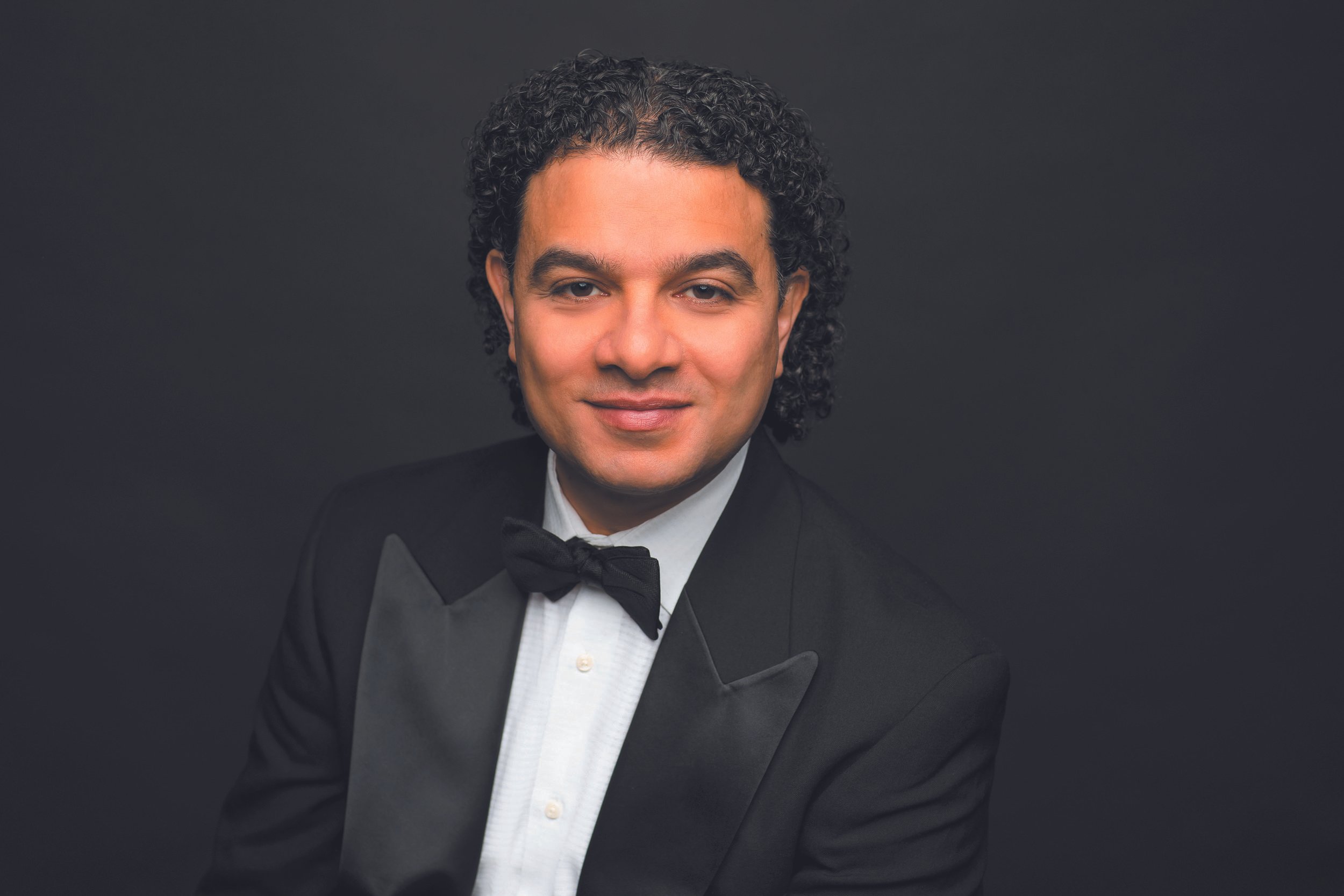
Mina Zikri, Music Director
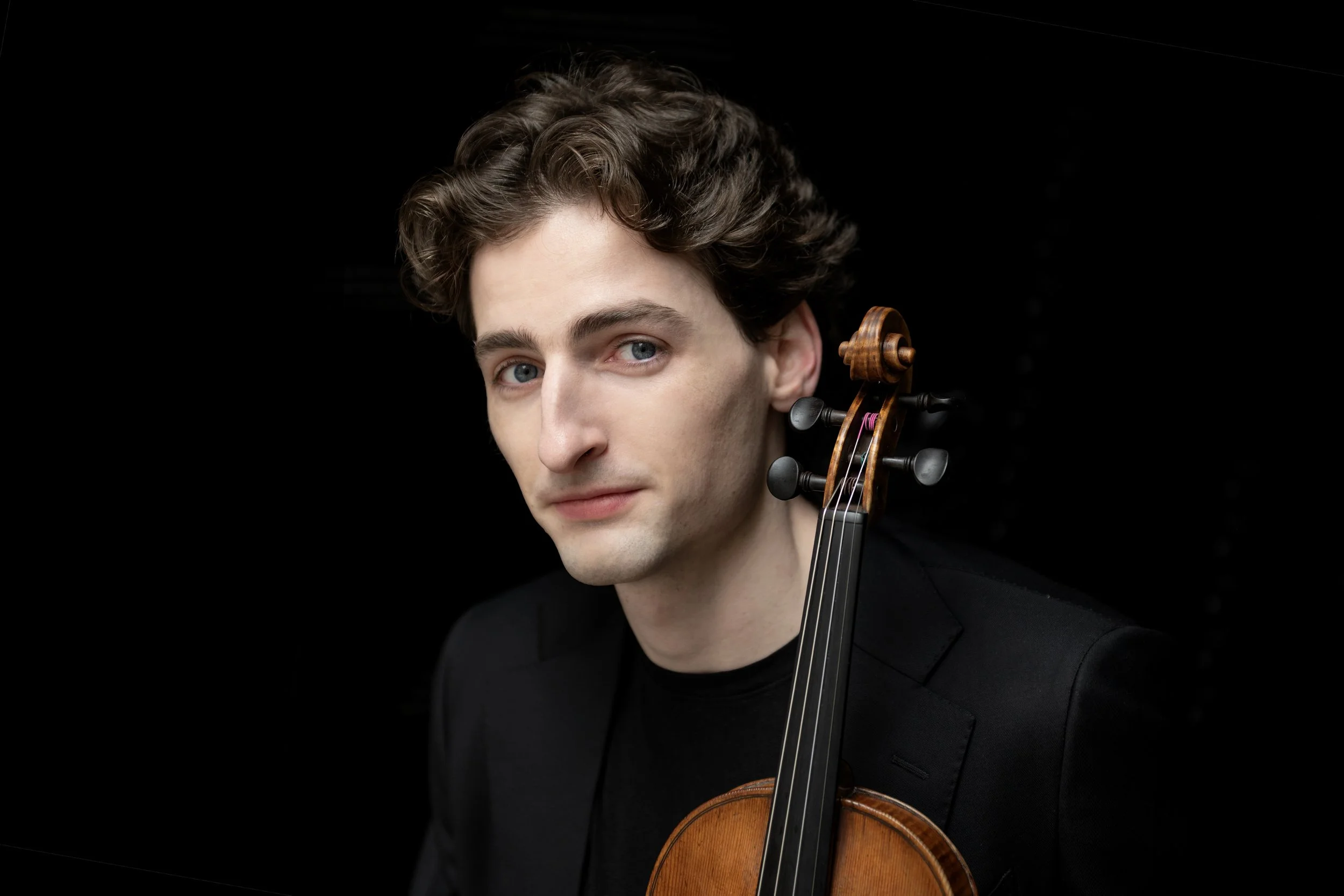
Joshua Brown, violin

This concert starts at 4:00pm and will be approximately 2 hours 5 minutes, including a 15-minute intermission.

Join Robbie Ellis for a pre-concert talk at 3:00pm. There will also be a short talkback with Mina Zikri and Joshua Brown at intermission.

This concert is dedicated to the memory of Samuel Magad (1932-2026), the Northbrook Symphony’s founder and first music director.


Johannes Brahms (1833-1897)
Violin Concerto in D major, Op. 77
I. Allegro non troppo
II. Adagio
III. Allegro giocoso, ma non troppo vivace
(approximately 40 minutes)

Brahms left a distinct impression in each genre he composed, and the Violin Concerto is certainly no exception. Composed in 1878 just before his Piano Concerto No. 2, it was actually only his second concerto regardless of instrument, following a twenty-year gap since his Piano Concerto No. 1. It is not surprising the concerto format was not Brahms' favorite, as he tended to focus on musical matters rather than individual performers. This mentality put him at odds with some of the musical sensibilities of the 19th century, an era full of traveling virtuosi itching to show off their technique. Brahms was lucky then to befriend the great violinist Joseph Joachim, for whom the concerto was written, and in whom he found a champion that was equally comfortable with Brahms's austere style and the "showiness" of the day. The balance of these two ideals make this concerto a centerpiece of the repertoire for modern day violinists, and a beloved listening experience for audiences across the globe.

—Intermission (15 minutes)—

Ludwig van Beethoven (1770-1827)
Symphony No. 3 in E-flat major, Op. 55, “Eroica”
I. Allegro con brio
II. Marcia funebre: Adagio assai
III. Scherzo: Allegro vivace
IV. Allegro molto
(approximately 50 minutes)

The Eroica Symphony came at a time of major turbulence in Beethoven's inner and outer worlds. Two years prior to its composition in 1804, Beethoven retreated to the German countryside in an attempt to heal his growing deafness to no avail. He found himself on the brink of taking his own life only to discover remarkable resolve within himself to continue living, as his passion for his art was too great. At the same time, Napoleon was in the midst of his conquests as a figurehead for the cause of the French Revolution, a cause celebrated by many in Europe, including Beethoven. The Eroica Symphony emerged as a response to these great movements across the continent and the actions of Napoleon. All of these feelings of pride and support for the leader of the revolution fell apart when Napoleon named himself Emperor of France in 1804, after the symphony had been completed. Beethoven, feeling disgusted and betrayed, crossed out his dedication to Napoleon, leaving only the title "Eroica" (Italian for “heroic”). None of this, however, changes the revolutionary nature of the music, which shattered all precedents and pushed orchestral musicians of the time to their limits. Even with his disenchantment with Napoleon, Beethoven expressed very deep feelings in this music, somehow belonging both to himself and to humanity as a whole all at once.

Program notes by Thomas Nickell.

Joshua Brown
Violin

Violinist Joshua Brown has been praised by audiences and critics worldwide for his “richness of sound, elegance of reading…commitment of every moment at the service of the work…” (La Libre). Joshua was awarded a 2025 Avery Fisher Career Grant, and gained international attention after winning the 2nd Prize and both Audience Awards at the 2024 Queen Elisabeth Competition in Brussels. As the recipient of a 2025 Louis and Susan Meisel Prize, Joshua is currently represented by Concert Artists Guild.

Joshua was first recognized for his debut performance with the Cleveland Orchestra and has gone on to perform regularly with orchestras around the world, including the Munich Radio Orchestra, MDR Sinfonieorchester, Indianapolis Symphony Orchestra, Chicago Civic Orchestra, East Coast Chamber Orchestra, Belgian National Orchestra, and Orchestre Philharmonique Royal de Liège, among others, continually garnering praise from critics. A passionate recitalist and chamber musician, Joshua also regularly appears in recital performances and takes part in chamber music festivals.

Joshua is currently pursuing his Artist Diploma at the New England Conservatory of Music under Donald Weilerstein after also earning his Bachelor and Master of Music there. Before his time at NEC, Joshua studied with Almita and Roland Vamos at the Music Institute of Chicago. Joshua is grateful to be playing an outstanding Nicolo Amati violin from Cremona, circa 1635-1640, on extended loan through the generosity of the Mary B. Galvin Foundation and the efforts of the Stradivari Society, a division of Bein & Fushi, Inc.

Joshua previously appeared with the Northbrook Symphony and conductor Lawrence Rapchak, playing Tchaikovsky’s Violin Concerto in April 2017 and Sarasate’s Navarra with his sister Isabella Brown in September 2017. He also performed at the Northbrook Symphony’s Annual Gala in June 2015.

joshuabrownviolinist.com | @joshuabrownviolinist

Joshua Brown’s appearance with the Northbrook Symphony is made possible in collaboration with the North Shore Chamber Music Festival.


Mina Zikri
Music Director and Conductor

Mina Zikri was appointed Music Director of the Northbrook Symphony and assumed his artistic leadership duties in the 2019-20 season. As founder, music director, and conductor of the Oistrakh Symphony of Chicago, Zikri uses his considerable talents to forge relationships with artists and musical organizations throughout the world, all in the name of developing new audiences for classical music. As a violinist and assistant conductor to Daniel Barenboim, he travels with the West-Eastern Divan Orchestra on their annual tours to major music festivals and concert halls around the world. He returns each season to his native Egypt to guest-conduct the National Symphony.

At a time when even some of the greatest orchestras in the United States are falling under the pressures of financial and cultural uncertainty, Zikri believes that the future of symphony orchestras can, and must, venture beyond traditional expectations.

As a faculty member of the DePaul University Community Music Division, his career distinctions include being named one of 12 finalists in the 2007 Gustav Mahler International Conducting Competition, where he was chosen from 223 candidates from 40 countries. He was awarded a fellowship to the American Academy of Conducting in Aspen, Colo., where he studied with Hans Graf, Hugh Wolff, Christopher Seaman, Robert Spano and Larry Ratcliff. He holds a Bachelor’s, Master’s, and Performance Certificate in violin from DePaul University. 

Zikri has been the resident conductor for the Lira ensemble since 2011.  In 2018, Zikri made his conducting debut at Carnegie Hall with the Oistrakh Symphony of Chicago, with a return performance in June 2019.


Orchestra

Violin I
Vladimir Gebe, Concertmaster
José Viera
Maya Shiraishi
Luis Vivas
Jenny Choi
Marian Mayuga
Marley Haller
Sara Oliva
Ben Perez
Lorena Uquillas
Adrian Nicolas Ong

Violin II
Irina Fatykhova, Keith and Kaori Williams Principal Second Violin Chair
Sam Sharp
Paula Johannesen
Emma Bruno
Alison Tatum
Eva Nicholson
Karen Szczech
Julimar Gonzalez

Viola
Christopher Kang, Principal
Rebecca Miller
Annika Sundberg
Oliver Greene
Desi Tantchev
Megan Yeung
Gina Stonikas
Yulong Han

Cello
Dan Klingler, Allen Nottke & Marcia Kirtland-Nottke Principal Cello Chair
Martin Nocedal
Rachel Hsieh
Jihoon Kim
Naza Bektur
Roman Wood
Patrycja Likos

Bass
Julian Romane, Cindy & Terry Brady Principal Double Bass Chair
Stephen Reichelt, Ron Bernardi Assistant Principal Double Bass Chair
Karl Seigfried
Ruben Gonzalez
Patrick Dugan

FluteJohn R. Halligan Charitable Fund Flute Section
Maria Schwartz
Suzanne Hannau

Oboe
Grace Hong, Carlos & Sandy Früm First Oboe Chair
Reed Cawley

Clarinet
Joyce Stenzel
Lee Kessler

Bassoon
Jon Schuler
Jacob Darrow

Horn
John Schreckengost
Alexander Love
Momoko Hasselbring Seko
Jack Moeser

Trumpet
Sarah Carrillo, Cindy & Terry Brady First Trumpet Chair
Bryant Millet, Jim & Julie Karagianis Second Trumpet Chair

Timpani
Christian Hughes

Previous
Previous

June 12, 2026: Beethoven Lives Upstairs

Next
Next

March 8, 2026: Comfortably Classical II